Where to Buy
8 Up-And-Coming Areas in Europe To Buy A Property
Big Bank For Your Buck: 8 Areas in Europe Where $200,000 Still Buys A Stunning Home
Most people searching for a home in Europe start in the same places. They type "Tuscany villas" into Google, they browse listings in Provence or dream about coastal towns they've seen in magazines. And then reality hits: €400,000 for a small apartment that needs work. €500,000 for a countryside house that's an hour from anything. Properties that look perfect in photos but come with price tags that make you reconsider everything.
The disconnect isn't that Europe is unaffordable, it's that everyone is looking in the same five places.
This guide walks you through eight regions neighboring some of Europe's most prestigious and fashionable hotspots, where the gap between price and quality hasn't closed yet. Four in Italy, two in Spain, two in France. Places where you can still find properties with character, space and a lifestyle that doesn't feel like a compromise.
If you're tired of scrolling through listings that don't match your budget, or wondering why everything affordable seems to be in the middle of nowhere, these are the places you'll want to know about.
Puglia, Italy
In June 2024, the G7 summit was held at a luxury resort near Fasano, and world leaders gathered in a region most people outside Italy had never heard of. The international press descended, and suddenly, photos of whitewashed towns and Adriatic coastline were everywhere.
Since then, the region has seen growing international attention, with the Four Seasons confirmed plans to open a resort near Ostuni by 2028. Luxury hotels don't make those bets unless they've studied the numbers and believe a market is about to shift from niche to mainstream.
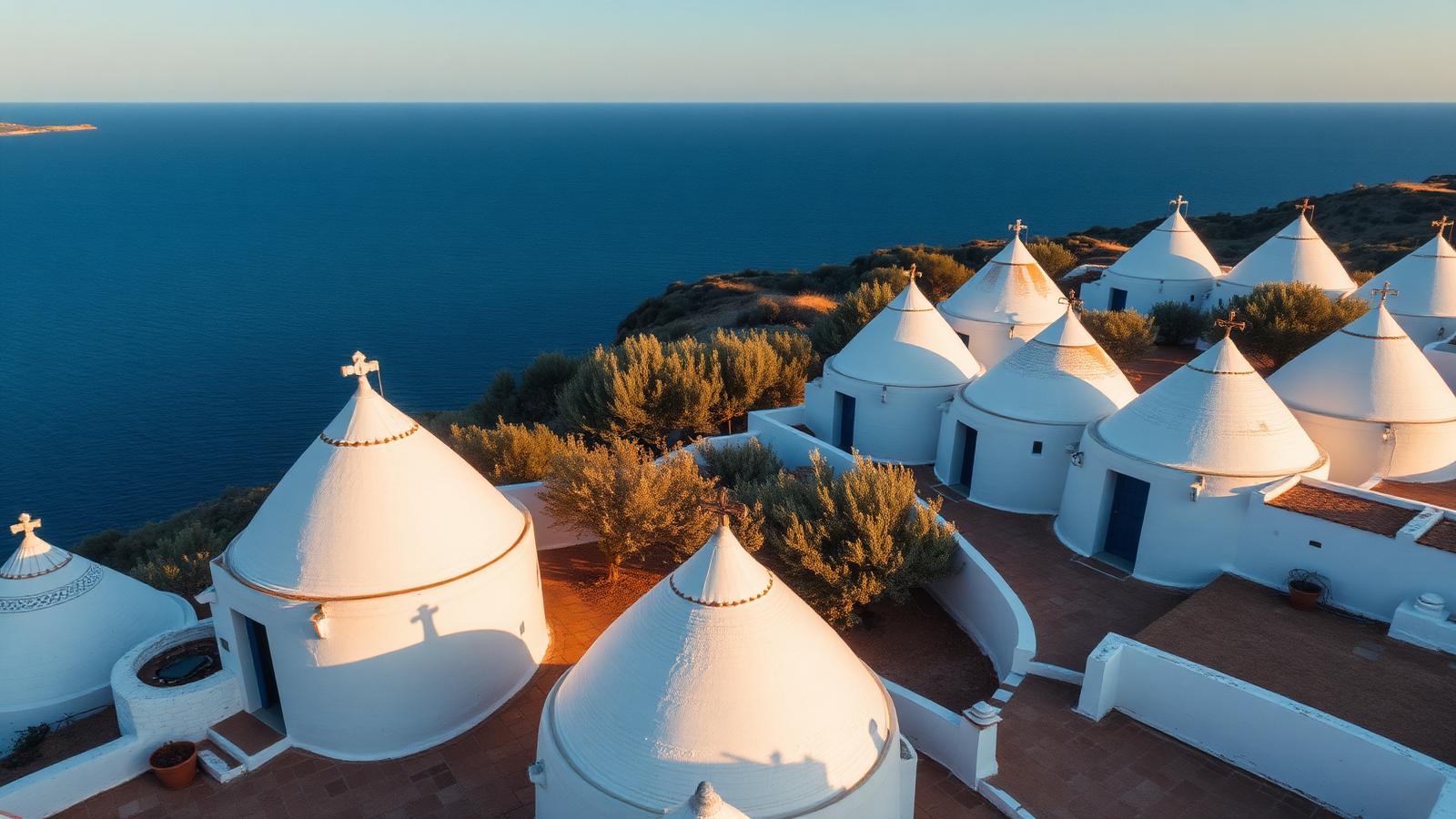
The trulli houses tell the story best. A decade ago, locals saw these cone-roofed stone buildings as impractical farm structures. Then, foreign buyers started restoring them, retaining the original architecture while adding modern systems. Now they're the most sought-after properties in the region, renting for €200 to €300 per night during the high season.
Trulli needing restoration
Fully restored & ready
Annual rental income (8-mo season)
:::
That's enough to cover the mortgage with money left over.
Property prices in Ostuni, the famous "White City," run around €1,700 per square meter. Drive 20 minutes inland to Carovigno and the same square meter costs €1,200. Same climate, same beaches fifteen minutes away, same olive groves. The only thing missing is the Instagram fame, which is exactly why the gap exists and exactly why it won't last forever.
Bari airport handled over 5 million passengers in 2019, and by 2024 that number reached 7.3 million. The highways between Bari and Lecce have been upgraded and high-speed rail connections to Rome and Milan have improved. These changes show the region is getting ready for growth. It's important to be realistic though: the bureaucracy is real and buying property takes at least three to four months. Still, you get Mediterranean coastline and historic properties at prices 40 to 50 percent lower than Tuscany or the Amalfi Coast, but that gap is closing as more people take notice.
Umbria, Italy
Umbria is often called Tuscany's younger sister and the comparison is accurate. They share a border and have the same rolling hills, the same cypress-lined roads, the same stone farmhouses. Umbria simply hasn't had the same international marketing machine behind it, which is exactly why it offers the same aesthetic and lifestyle at half the price.
In 2024, real estate transactions grew by 14.2 percent, but prices only went up about 2.4 percent. This means the market is growing without the kind of frenzy that makes it too expensive for locals. The price comparison says it all:
- Restored farmhouse with land in Umbria: €250k–€450k
- Same property in Tuscany: €600k–€800k
- Cost of living difference: 25–39% lower than in Tuscany
That's not a small difference. It can mean the choice between stretching your budget or having some financial breathing room.
The cost of living reinforces that gap. Restaurants in Umbria charge 25 to 30 percent less than in Tuscany, groceries are cheaper and property taxes are lower. Over time, these savings add up, especially if you spend several months a year there. The people moving here are changing too, it's not just retirees anymore. Remote workers who can live anywhere are choosing places with good internet, lower costs, and access to nature. Towns like Spello and Todi now have small expat communities, but not so much that you feel like you're in an English-speaking bubble. Perugia is a university city that stays lively all year, with good train connections to Florence and Rome. If you want the Tuscan look and feel without the high prices and crowds, Umbria is a smart choice in Italy right now.
Trieste, Italy
Trieste was the main port of the Austro-Hungarian Empire and this history shows everywhere you look. The architecture is Viennese, the café culture feels Central European and the vibe is cosmopolitan in a way that doesn't match most Italian cities. Property prices have been climbing steadily, but they're still well below those in other Italian cities with comparable services. A two-bedroom apartment in a renovated period building in the city center runs €250,000 to €300,000. The same apartment in Milan or Venice would cost double.
Foreign buyers from Austria, Hungary, Slovenia and Croatia are driving demand because Trieste offers what they know: efficient public services, good healthcare, and reliable infrastructure, all at about half the cost of their own capital cities. You're just fifteen minutes from Slovenia and an hour from Austria with direct flights to major European cities. This cross-border appeal is creating new demand that's different from the usual Italian real estate market.
Properties here have a distinct character: Art Nouveau apartments with impossibly high ceilings, neoclassical buildings that have been maintained rather than gutted, modern coastal villas with Adriatic views. The rental market works because of consistent demand from university students, relocated professionals and foreign investors. Rental yields run 5 to 7 percent and properties typically sell within one to two weeks. Trieste is practical rather than romantic, but if you want the Italian lifestyle with Central European efficiency at prices that still make sense, this is one of the few Italian cities where that combination still exists.
Sicily, Italy
Sicily has been "about to take off" for years, but now something is actually changing. Property prices average €1,160 to €1,200 per square meter, which is 30 to 40 percent lower than the national average in Italy. Typical stats range from:
- Restored Baroque townhouses in Ragusa or Modica: €180K–€280K
- Coastal properties near Syracuse: €200K–€350K
- Palermo city apartments in historic buildings: €100K–€200K
- Interior countryside homes with land: €150K–€250K
The eastern coast is where most international attention goes. Syracuse has ancient Greek ruins, UNESCO status and an eight-month tourism season from April through November. The south coast features Ragusa, Modica, and Scicli - Baroque towns where locals still go about their daily lives and where properties run from €180,000 to €280,000 for restored townhouses. The trade-off is that you're further from major airports, which is why prices are lower.
The challenges are legitimate: bureaucracy is slower than the mainland, properties can have legal complications and infrastructure varies wildly depending on location. But for buyers who conduct thorough due diligence and work with professionals familiar with the local system, Sicily offers one of the best value propositions in the Mediterranean at present.
Valencia Region, Spain
In 2025, Valencia has officially become one of Europe's hottest real estate markets, not because prices have skyrocketed, but because growth, demand and livability are converging. Property prices have risen significantly, with some areas seeing double-digit annual increases, but they're still lower than in Barcelona or Madrid. A two-bedroom apartment in Ruzafa or El Cabanyal typically costs between €200,000 and €300,000. The same apartment in Barcelona runs €400,000 or more. Rental yields range from 5 to 7 percent and the cost of living is 30 to 40 percent lower than in Barcelona.
Rental demand is year-round rather than seasonal. University students require housing because the city is home to two major universities. Professionals relocating for work often need apartments because tech companies are establishing new offices. Tourists prefer short-term rentals because the city offers beaches, culture, and good weather without the crowds typically found in Barcelona.
High-speed rail connects Valencia to Madrid in just over an hour. The international airport keeps expanding and the city gets more than 300 days of sunshine annually. Valencia reached a tipping point where it's no longer "a cheaper alternative to Barcelona" but a place people choose first.
Murcia Region, Spain
Murcia is the region most people skip when searching for Spanish property. It sits between Valencia and Andalusia - close enough to benefit from their infrastructure, far enough to avoid price inflation. The region gets more than 300 days of sunshine a year and property prices average €1,219 per square meter, compared to Spain's national average of €1,888. That translates to a two-bedroom apartment near the coast for €120,000 to €150,000, a villa with a pool for €200,000 to €250,000.
Foreign buyer interest has been growing steadily, driven by Northern Europeans priced out of Costa del Sol but still wanting Spanish coastal living. Los Alcázares sits on the Mar Menor, a saltwater lagoon separated from the Mediterranean by a thin strip of land. The water is shallow, warm and calm - ideal for families who want water access without the big waves or crowds that often come with famous beaches.
Cartagena is a historic anchor with Roman ruins and a rich naval history. The city is getting urban renewal investment and younger Spanish buyers are starting to pay attention as prices in Valencia and Barcelona become unrealistic. If you want affordable Spanish coastal living without the crowds or high costs, this is one of the last places where you can still find real value.
Occitanie, France
For years buyers have focused on Provence and the Côte d'Azur in southern France. These markets have become expensive and are now dominated by luxury buyers who could write checks without needing mortgages. Occitanie offers a similar lifestyle: Mediterranean climate, historic villages and vineyards, but at prices 40 to 60 percent lower.
Toulouse is France's fourth-largest city and a hub for aerospace and technology. Montpellier sits on the coast and has become one of France's fastest-growing cities. But the real appeal is in small towns scattered throughout: Uzès, Pézenas and villages in Languedoc wine country. Stone houses with shutters, weekly markets where farmers sell their own produce and outdoor cafés where locals sit for hours.
Property prices in Montpellier range from €3,000 to €4,000 per square meter within the city itself. Drive 30 minutes inland and you'll find restored village homes in rural areas like Tarn or Lot where you can buy a stone farmhouse with land for under €250,000. What's driving increased interest is remote work, making rural living viable for people who used to feel stuck in expensive cities.
Nouvelle-Aquitaine, France
Nouvelle-Aquitaine is France's largest region, stretching from the Loire Valley to the Spanish border. It includes Atlantic beaches, Dordogne countryside, Bordeaux wine country and mountain access. It offers almost everything you could want from France, but it's flown under the radar compared to Provence or the Alps.
The Atlantic coast is different from the Mediterranean, with longer beaches, bigger waves and fewer crowds, even in summer. Biarritz and Arcachon are well-known and expensive, but smaller villages like Hossegor or Capbreton offer the same beach access without luxury price tags. The Dordogne is where British and Dutch buyers have been quietly purchasing for years. Properties range from village homes needing restoration for €80,000 to €150,000, up to restored châteaux for €400,000 to €600,000.
The climate here is Atlantic, meaning it's mild all year with warm summers but without the intense Mediterranean heat. The infrastructure is strong, with Bordeaux's major airport and high-speed rail to Paris taking just two hours. For buyers looking for Atlantic beaches, countryside charm, or wine culture without the high prices of Provence, Nouvelle-Aquitaine is still one of France's most accessible large regions.
The Common Thread
These eight regions aren't 'hidden gems' - they're functioning markets with real infrastructure and properties people actually live in. What makes them worth considering is the gap between their prices and their more famous neighbors. That gap exists because not everyone has figured them out yet, but it's closing as infrastructure improves and international buyers pay attention.
The people who benefit are those who look now rather than waiting until these regions reach the same prices and saturation as the places everyone already knows. Not rushing, but not waiting either.