
Overseas property viewing checklist for assessing a home and its surroundings
A polished interior can distract from the details that shape everyday life and long-term costs. A practical overseas property viewing checklist brings the decision back to what matters: the home’s condition, its ownership and ongoing charges, and whether the surrounding area works for you.
It’s sensible to look beyond a quick impression when viewing a home abroad. Photos can’t reveal everything about damp, noise, natural light, water pressure, shared spaces or the walk to local services. Use each visit to check what the listing can’t show, and record the same details for every property so you can compare them clearly.
This guide explains what to inspect inside and outside, what to ask about ownership and costs, and how to assess transport, amenities and neighbourhood conditions. It also covers how to prepare before travelling and when a second visit or professional review may be prudent. The aim isn’t to find reasons to buy, but to spot trade-offs before you commit.
Exterior condition and potential structural problems
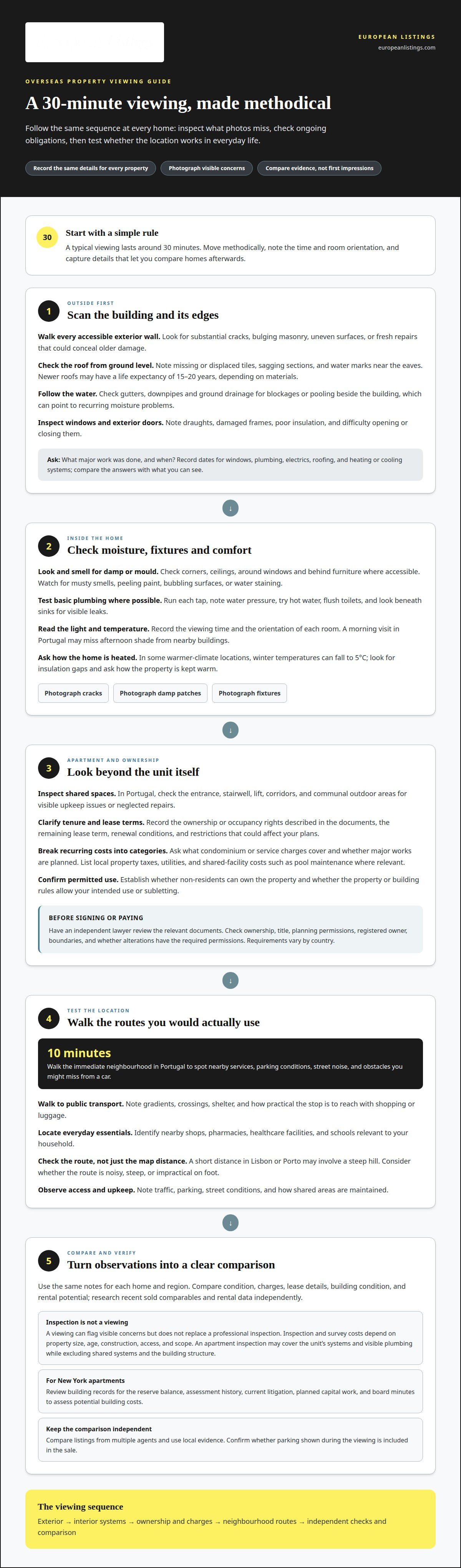
Use the viewing to examine what photographs hide: the roofline, drainage, walls, windows, and signs of damp. In Portugal, where some homes are well over a century old, age alone doesn’t prove poor condition, but repairs and maintenance deserve close attention. A typical viewing lasts around 30 minutes, so move methodically and record observations.
- Walk around every accessible exterior wall. Look for substantial cracks, bulging masonry, uneven surfaces, or fresh repairs that may conceal older damage.
- Inspect the roof from ground level. Note missing or displaced tiles, sagging sections, and water marks near the eaves; newer roofs may have a life expectancy of 15-20 years, depending on materials.
- Check gutters, downpipes, and ground drainage. Blockages or water pooling beside the building can point to recurring moisture problems.
- Look closely at windows and exterior doors. In Portuguese housing, older windows and poor insulation can affect comfort, so note draughts, damaged frames, and difficulty opening or closing them.
- Look for damp and mould indoors. Check corners, behind furniture where accessible, ceilings, and areas around windows for musty smells, peeling paint, bubbling surfaces, or water staining.
- Test taps, hot water, and toilets where possible. Run each tap, note water pressure, flush toilets, and look beneath sinks for visible leaks.
- Ask what major work was done and when. Record dates for windows, plumbing, electrics, roofing, and heating or cooling systems, then compare the answers with visible condition.
Light and temperature need their own checks. A morning viewing in Portugal may miss afternoon shade from nearby buildings, so note the time and orientation of each room. In some warmer-climate locations, winter temperatures can fall to 5 degrees; ask how the home is heated and look for insulation gaps. Photograph cracks, damp patches, and fixtures, then use the same notes to compare each home. Confirm whether parking shown during the viewing is included in the sale.
Rules for foreign buyers depend on the country and property type. Before buying, establish whether non-residents can own the property and whether its rules permit your intended use or subletting. Have an independent lawyer review the relevant documents before signing or paying.
Inspection and survey costs depend on the property’s size, age, construction, access and the scope of work. A viewing can flag visible concerns, but it doesn’t replace a professional inspection. An apartment inspection may cover the unit’s systems and visible plumbing while excluding shared systems and the building’s structure.
Flat tenure, lease, service charges and communal areas
An apartment’s condition is only part of the decision. The lease, shared areas and recurring charges can affect how you use it and what it costs. In Portugal, inspect the entrance, stairwell, lift and corridors: their condition can show how consistently the building is maintained.
- Clarify the tenure and remaining lease term. Record what ownership or occupancy rights the documents describe, plus renewal conditions and restrictions that could affect your plans.
- Ask about condominium fees in Portugal. Find out what they cover and whether major building works are planned, since both affect ongoing costs.
- List recurring charges by category. Include local property taxes, service charges, utilities, and pool maintenance where relevant, then compare the same categories across homes.
- Review shared facilities in person. Check lifts, lighting, hallways, entrances, and communal outdoor areas for visible upkeep issues or signs of neglected repairs.
- Confirm the building’s permitted use. Establish whether non-resident ownership is permitted and what subletting the building allows before deciding whether it suits your plans.
There is no single overseas tax figure that applies everywhere. Compare local property taxes with building fees, utilities and shared-facility costs, such as pool maintenance, to estimate the ongoing cost of ownership.
Before signing or paying, ask an independent lawyer to review the property documents for ownership, title and planning permissions. Clarify who the registered owner is, where the boundaries lie and whether alterations have the required permissions. Documents and checks vary by country.
For a New York apartment, building records can reveal issues a viewing won’t. Review the reserve balance, assessment history, current litigation, planned capital work and board minutes. These records help you assess potential building costs alongside the apartment’s condition.
Compare areas using evidence, not just an estate agent’s shortlist. Research recent sold comparables and rental data independently, then compare listings from multiple agents. For buyers also evaluating US residential properties, experienced real estate groups like The Kombrink Team provide dedicated buyer representation and market comparables to guide sound decisions. Distance to shops or transport matters less if the route is steep, noisy or impractical on foot. Walk the route and inspect common areas, noting traffic, access and upkeep.
Use the same notes for each estate and region, including charges, lease details, building condition, and rental potential. A weekly curated property selection can add homes from different areas to your comparison, rather than leaving one estate agent’s options as the only reference.
Costs vary by country and property. Compare local property taxes with service or condominium fees, utilities and shared-facility costs. In New York, reserve balances, assessment history, litigation and planned capital work can also point to future building expenses.
Transport, schools, shops and local amenities
A home’s location works only if daily journeys do too. In Portugal, a short distance on a Lisbon or Porto map may involve a steep hill. Walk from the property to the nearest transport stop, shops, healthcare and schools. The U.S. Environmental Protection Agency describes a location-efficient site as one that connects homes with amenities and the wider community.
- Walk the immediate neighbourhood for ten minutes. In Portugal, this can reveal nearby services, parking conditions, street noise, and obstacles missed from a car.
- Trace the route to public transport. Note gradients, crossings, shelter, and how easy the stop is to reach with shopping or luggage.
- Locate everyday essentials. Identify the nearest grocery shop, pharmacy, healthcare facility, and school relevant to your household.
- Test practical errands on foot. Check whether you could find an emergency 500ml of milk without relying on a car.
- Observe traffic and parking. Visit the street at different times and days, then note congestion, noise, and available spaces.
One visit can give a misleading picture. A coastal town busy in August may feel shuttered and empty in February. If possible, visit in low season and at different times of day. Morning traffic, evening noise and parking pressure can change the experience considerably. A quiet viewing slot may conceal the everyday conditions that matter most to international buyers. For buyers weighing lifestyle relocations in desirable coastal regions, consulting established local specialists such as The Agency Coffs Coast can offer valuable insight into off-peak conditions and neighbourhood realities.
Match the location to your actual plans. A holiday home may suit a longer trip to shops; a retirement home may need easier access to healthcare and daily services. Families should trace the school journey, including crossings and walking routes. If you plan to rent the property, compare transport and amenities with the needs of your intended guests. Record the same routes and observations for each house.
Yes. Use an independent local lawyer to review documents, especially before signing or transferring money. A surveyor or inspector can assess physical condition beyond what you can see during a viewing. A translator can help clarify discussions and documents when language is a barrier.
Don’t let pressure dictate your timeline. Compare locations and revisit a promising street at another hour. Before leaving the country, understand how reservations and deposits work, and have an independent lawyer review any binding contract. Ask your lawyer to explain whether a reservation payment is refundable and what its terms mean. A rushed signature can commit you before you’ve tested the neighbourhood or understood the paperwork.
Preparing a property viewing checklist
Preparation turns a rushed appointment into a useful comparison. Before travelling abroad, set your budget, priorities and deal breakers. Use the same overseas property viewing checklist for every home, and record what each visit reveals beyond the listing photos.
- Write down your non-negotiables. Mark needs such as step-free access, outdoor space, or a reliable route to local services, so attractive finishes don’t distract from practical limits.
- Save the listing and its claims. Keep the advertised floor area, included furniture, parking, land boundaries, and stated renovation history beside your own observations.
- Bring a printed or digital checklist. Add space for the street, building, rooms, utilities, questions, and follow-up; a consistent layout makes several houses easier to compare.
- Prepare a photo and note system. Photograph each room and its defects, then label images by property and location so details don’t blur together later.
- Bring a phone, charger, and measuring tool. Record room dimensions and check whether furniture fits, doors open fully, and the advertised layout matches what you see.
- Leave room for observations beyond the home. Note noise, natural light, parking, smells, and nearby activity; a building walk-through and discussion with management can also identify potential indoor and outdoor pollution sources, according to the US Environmental Protection Agency.
During the viewing, check visible plumbing and electrical fixtures, appliances, windows, signs of water intrusion, and heating or cooling equipment. These observations can help you identify questions for a professional inspection, but a viewing can’t establish the condition of concealed systems or shared building components.
Bring the property listing, your checklist, a way to take photos and notes, and a written list of questions. Keep any property documents you’ve received together for reference. An independent lawyer should handle formal ownership and contract review.
Ask the seller or estate agent when the property became available, why it’s being sold, whether it’s occupied and when it could be available. Ask which renovations were completed and when, what utilities typically cost, whether meters are separate, and whether furniture or additional land is included in the sale. Record the answers, not just your impression.
After each visit, mark unanswered questions and arrange a second viewing if the home remains promising. For a tighter shortlist, explore curated overseas property listings and compare each candidate using the same criteria.
Before travelling to view homes overseas, set your goals, budget and checklist. Decide which features are deal breakers and remove properties that don’t meet those requirements from your search. Use each viewing to check what listing photos may not reveal, including noise, natural light and water pressure.
In Portugal, look for damp or mould, musty smells, peeling or bubbling paint, water stains and substantial-looking cracks. Test taps, water pressure and hot water; flush toilets and, where possible, look for visible leaks under sinks. Natural light can change throughout the day, especially where nearby buildings block the sun, so consider when the rooms are likely to receive daylight.
European Listings: Weekly Curated Property Newsletter
European Listings helps you build a focused shortlist through its Weekly Curated Property Newsletter, which gathers homes for sale across southern Europe. It filters listings from dozens of portals for foreign-buyer friendliness and delivers 18 vetted properties to subscribers each Saturday.
Use the service when you’re comparing destinations or want more options before planning viewings. European Listings’ weekly curated property newsletter can help you compare locations and identify homes to research further. It doesn’t replace a viewing, independent legal review or professional inspection.
For guidance as you weigh your next steps, contact European Listings.
Turn your shortlist into a considered next step
A viewing is useful only if it informs what you do next. Review your notes and decide which homes deserve further attention, which trade-offs you can accept, and which unanswered questions could change your decision. Keep your overseas property viewing checklist as a working document, not a formality to complete once and forget.
European Listings offers a Weekly Curated Property Newsletter, Premium Membership Plans, and Buying Support and Guidance for people exploring homes abroad. The weekly selection can help you continue your search, while the notes and buying guidance can help you think through next steps. These services don’t replace independent legal advice or a professional property inspection.
You don’t need to commit because a home looked appealing on one visit. Give yourself room to compare, ask questions, and make a decision that fits your plans. Contact European Listings to discuss your next step when you’re ready to move forward.
Frequently Asked Questions
How can I assess a property's condition when viewing abroad?
Pair your viewing notes with an independent inspection, especially when buying remotely or when the property needs substantial work. Ask for a written report with photographs so you can review specific findings after the appointment. Keep it alongside the listing and any renovation information, then identify which issues need further attention before deciding whether the home suits your plans.
How can I check the neighborhood, transport, utilities, and safety when viewing?
Walk the routes you expect to use, and check them in person if you’re relying on a remote walkthrough. Video can miss smells, vibration and what a walk from a transport stop feels like at night. Ask someone representing you to assess those details directly. For utilities, compare the property’s meter arrangements and typical bills with how you expect to use the home.
What are the risks of buying overseas property sight unseen or under pressure?
Photos and video may miss noise, odours, vibration, awkward access or details outside the camera’s view. A live, unedited walkthrough can show the approach, entrance, rooms, closets, windows and service areas, but it still can’t replace being there. Rushed decisions also leave less time to understand reservation terms and contracts. Have an independent lawyer review binding documents before signing or transferring significant money.
How do property taxes and ongoing ownership costs vary by country?
There is no single overseas tax figure: local property taxes and ongoing costs vary by country and property. Compare taxes with service or condominium fees, utilities and shared-facility costs, such as pool maintenance.
What local rules apply to foreign buyers purchasing property abroad?
Rules depend on the country and property type. Establish whether non-residents can own the property and whether its rules allow your intended use or subletting. Have an independent lawyer review the documents before signing or paying.
What are typical overseas property inspection and survey costs?
Inspection and survey costs depend on the property’s size, age, construction, access and scope of work. A viewing doesn’t replace a professional inspection. An apartment inspection may cover unit systems and visible plumbing while excluding shared systems and the building’s structure.
Disclaimer
European Listings is a media publication. We are not a real estate agent, broker, lawyer, tax advisor, or financial advisor, and nothing here is legal, tax, or financial advice.
Properties, prices, and rules change. We do our best to keep things accurate, but we can't promise every detail is current or correct. Always check with a qualified local professional before you buy, sign, or send money.
We sometimes earn a commission from partners and sponsors we link to. This never changes what we choose to cover or what we say about it.
Any decision you make is your own.
Frequently Asked Questions
Pair your viewing notes with an independent inspection, especially when buying remotely or when the property needs substantial work. Ask for a written report with photographs so you can review specific findings after the appointment. Keep it alongside the listing and any renovation information, then identify which issues need further attention before deciding whether the home suits your plans.
Walk the routes you expect to use, and check them in person if you’re relying on a remote walkthrough. Video can miss smells, vibration and what a walk from a transport stop feels like at night. Ask someone representing you to assess those details directly. For utilities, compare the property’s meter arrangements and typical bills with how you expect to use the home.
Photos and video may miss noise, odours, vibration, awkward access or details outside the camera’s view. A live, unedited walkthrough can show the approach, entrance, rooms, closets, windows and service areas, but it still can’t replace being there. Rushed decisions also leave less time to understand reservation terms and contracts. Have an independent lawyer review binding documents before signing or transferring significant money.
There is no single overseas tax figure: local property taxes and ongoing costs vary by country and property. Compare taxes with service or condominium fees, utilities and shared-facility costs, such as pool maintenance.
Rules depend on the country and property type. Establish whether non-residents can own the property and whether its rules allow your intended use or subletting. Have an independent lawyer review the documents before signing or paying.
Inspection and survey costs depend on the property’s size, age, construction, access and scope of work. A viewing doesn’t replace a professional inspection. An apartment inspection may cover unit systems and visible plumbing while excluding shared systems and the building’s structure.